






Canada’s Permanent Residency Through Express Entry Programs (2026 Complete Guide)

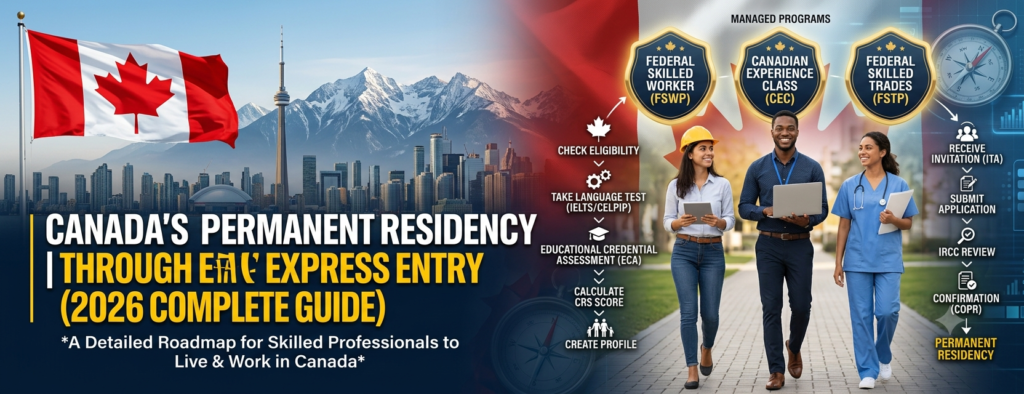
Canada’s Permanent Residency Through Express Entry Programs (2026 Complete Guide)
Canada continues to be one of the world’s most attractive destinations for skilled professionals seeking permanent residency (PR). In 2026, the Express Entry system remains the fastest and most popular immigration pathway for qualified foreign workers. With updated category-based selections, Provincial Nominee Program (PNP) integration, and improved digital processing, thousands of applicants receive Invitations to Apply (ITAs) every year.
If you have the right education, work experience, and language proficiency, Express Entry can provide a direct pathway to becoming a Canadian permanent resident and eventually a Canadian citizen.
What is Canada’s Express Entry System?
Express Entry is an online immigration management system operated by Immigration, Refugees and Citizenship Canada (IRCC). It manages applications for skilled workers who wish to immigrate permanently to Canada.
The system ranks candidates using the Comprehensive Ranking System (CRS) and regularly invites the highest-ranking applicants to apply for permanent residence.
Most complete applications continue to be processed in approximately six months, although actual processing times may vary depending on application volume and individual circumstances.
Express Entry Programs in 2026
Express Entry manages applications under three major federal immigration programs.
1. Federal Skilled Worker Program (FSWP)
The Federal Skilled Worker Program is designed for individuals with skilled foreign work experience.
Applicants generally need:
- At least one year of continuous skilled work experience
- Minimum language proficiency in English or French
- Educational qualifications assessed through an Educational Credential Assessment (ECA)
- Sufficient CRS score
- Settlement funds (unless exempt)
This program is ideal for professionals living outside Canada.
2. Canadian Experience Class (CEC)
The Canadian Experience Class targets individuals who already possess skilled Canadian work experience.
Requirements generally include:
- At least one year of eligible Canadian work experience
- Required language proficiency
- Legal work authorization during employment
This remains one of the fastest pathways for international graduates and temporary foreign workers already living in Canada.
3. Federal Skilled Trades Program (FSTP)
This program is designed for qualified tradespeople.
Eligible occupations include many skilled trades such as:
- Electricians
- Welders
- Carpenters
- Plumbers
- Mechanics
- Construction workers
- Industrial technicians
Applicants generally require:
- Relevant skilled work experience
- Language requirements
- Job offer or certificate of qualification (where applicable)
Category-Based Express Entry Draws
One of the biggest improvements to Express Entry is the introduction of category-based selection.
Instead of inviting applicants solely based on CRS scores, Canada now conducts draws targeting workers with skills in sectors experiencing labour shortages.
Priority categories commonly include:
- Healthcare occupations
- STEM professions
- Skilled trades
- Education occupations
- Agriculture and agri-food occupations
- Transport occupations
- French-language proficiency
Candidates who qualify under these categories may receive invitations even with CRS scores below general draws.
Step-by-Step Express Entry Process (2026)
Step 1: Check Your Eligibility
Before creating an Express Entry profile, determine which immigration program you qualify for.
You should evaluate:
- Age
- Education
- Skilled work experience
- Language ability
- Adaptability
- Job offer (if applicable)
Step 2: Take an Approved Language Test
You must complete an approved language examination.
Accepted English tests include:
- IELTS General Training
- CELPIP General
Accepted French tests include:
- TEF Canada
- TCF Canada
Higher language scores significantly improve your CRS ranking.
Step 3: Obtain an Educational Credential Assessment (ECA)
Applicants educated outside Canada usually need an Educational Credential Assessment to verify that their foreign education is equivalent to Canadian standards.
Approved organizations issue ECAs after evaluating your academic credentials.
Step 4: Calculate Your CRS Score
Your Comprehensive Ranking System score is calculated using several factors.
These include:
- Age
- Education
- Language proficiency
- Skilled work experience
- Canadian work experience
- Spouse factors
- Provincial nomination
- Job offer
- French language ability
- Additional qualifications
A provincial nomination adds 600 CRS points, virtually guaranteeing an Invitation to Apply.
Step 5: Create Your Express Entry Profile
Create an online profile through your IRCC account.
Information required includes:
- Passport details
- Education
- Language results
- Employment history
- Family information
- ECA results
- National Occupational Classification (NOC) code
Once submitted, your profile enters the Express Entry pool.
Step 6: Receive an Invitation to Apply (ITA)
IRCC conducts regular Express Entry draws throughout the year.
If your CRS score meets the cutoff for a draw, you will receive an Invitation to Apply for permanent residence.
Some applicants receive invitations through:
- General draws
- Canadian Experience Class draws
- Provincial Nominee draws
- Category-based draws
Step 7: Submit Your Permanent Residence Application
After receiving an ITA, applicants generally have 60 days to submit their complete application.
Required documents usually include:
- Passport
- Educational Credential Assessment
- Language test results
- Employment reference letters
- Police certificates
- Medical examination
- Digital photographs
- Proof of settlement funds (where applicable)
Step 8: IRCC Reviews Your Application
IRCC verifies:
- Identity
- Employment history
- Medical admissibility
- Criminal background
- Security screening
- Document authenticity
Most complete applications continue to be finalized within approximately six months.
Step 9: Receive Confirmation of Permanent Residence (COPR)
Once approved, applicants receive:
- Confirmation of Permanent Residence (COPR)
- Permanent Resident Visa (if required)
After arriving in Canada, eligible newcomers receive their Permanent Resident Card.
Comprehensive Ranking System (CRS) Factors
The CRS awards points based on:
- Age
- Education
- Language ability
- Canadian work experience
- Foreign work experience
- Spouse qualifications
- Provincial nomination
- Valid Canadian job offer
- French language proficiency
- Canadian education
Improving any of these factors can substantially increase your ranking.
How to Increase Your CRS Score
If your CRS score is below recent invitation levels, consider these strategies:
- Improve IELTS or CELPIP scores
- Learn French and take an approved French language test
- Gain additional skilled work experience
- Complete another educational qualification
- Obtain Canadian education
- Secure a Provincial Nominee Program nomination
- Obtain an eligible Canadian job offer
- Include a qualified spouse’s credentials
Provincial Nominee Program (PNP)
Every Canadian province and territory (except Quebec and Nunavut) operates Provincial Nominee Programs aligned with local labour market needs.
Many Express Entry candidates receive nominations through streams targeting occupations in demand.
Receiving a provincial nomination adds 600 CRS points, making an ITA highly likely.
Popular PNP destinations include:
- Ontario
- British Columbia
- Alberta
- Saskatchewan
- Manitoba
- Nova Scotia
- New Brunswick
- Prince Edward Island
Documents Required
Applicants typically need:
- Valid passport
- Language test results
- Educational Credential Assessment
- Employment reference letters
- Police certificates
- Medical examination report
- Proof of settlement funds (if required)
- Marriage certificate (if applicable)
- Birth certificates for dependent children
Estimated Express Entry Costs (2026)
Applicants should budget for several mandatory expenses.
Typical costs include:
- Language test fees
- Educational Credential Assessment
- Biometrics fee
- Medical examination
- Police certificates
- Permanent residence application fees
- Right of Permanent Residence Fee (RPRF)
- Translation and notarization (if applicable)
Overall expenses generally range between CAD $2,500 and CAD $5,000 for a single applicant, depending on individual circumstances.
Benefits of Canadian Permanent Residency
Permanent residents enjoy numerous advantages, including:
- Live and work anywhere in Canada
- Access to publicly funded healthcare
- Free public education for children
- Eligibility for most social benefits
- Pathway to Canadian citizenship
- Protection under Canadian law
- Freedom to change employers
- Sponsor eligible family members
- Travel in and out of Canada while maintaining residency obligations
Common Reasons for Application Refusal
Applications may be refused because of:
- Incomplete documentation
- Incorrect information
- Insufficient proof of work experience
- Low language scores
- Medical inadmissibility
- Criminal inadmissibility
- Misrepresentation
- Missing deadlines
Preparing accurate documentation significantly improves approval chances.
Final Thoughts
Canada’s Express Entry system remains one of the world’s most efficient and transparent skilled immigration programs in 2026. With category-based draws, provincial nominations, and regular invitations, qualified professionals have multiple opportunities to secure permanent residence.
Applicants who strengthen their language scores, gain additional work experience, or obtain a Provincial Nominee Program nomination can substantially improve their chances of receiving an Invitation to Apply. Careful preparation, accurate documentation, and staying informed about IRCC updates are key to a successful application.


Top Universities
 ANU University
  Monash University
  University of Oxford
  Daad
Daad  Istituto Marangoni London
  Southern Cross University
  University of British Columbia (UBC)
  UCLouvain
  Pierre Elliott Trudeau Foundation
  University of Florence
 Recent Post

SarkariNetwork – Government Jobs, Exam Alerts & Scholarship...
Read More 

Is Arizona State University (ASU) Accredited?
Read More

Is Full Sail University Legit?
Read More
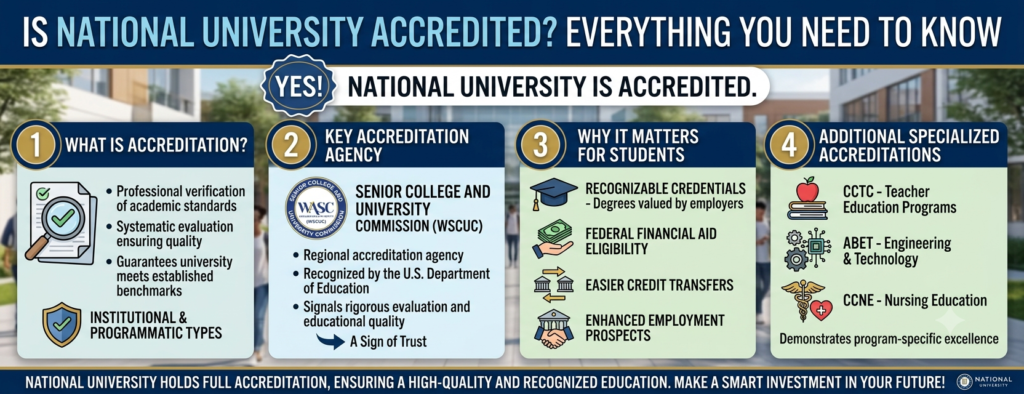
Is National University Accredited?
Read More
Work and Travel in Canada with the IEC...
Read More

The Practical Guide to GD&T Training: What It...
Read More

CMMS and Preventive Maintenance Software Solutions Guide
Read More

Boston wedding venues
Read More

What Is an Artificial Intelligence (AI) Death Calculator
Read More

How Cloud Services Are Transforming Businesses in Reading,...
Read More

A Practical Way to Talk About Emergence Without...
Read More

How Learning Skills with AI
Read More




















0 Comments
No comments yet.