



The Switzerland Work Visa Procedure 2026

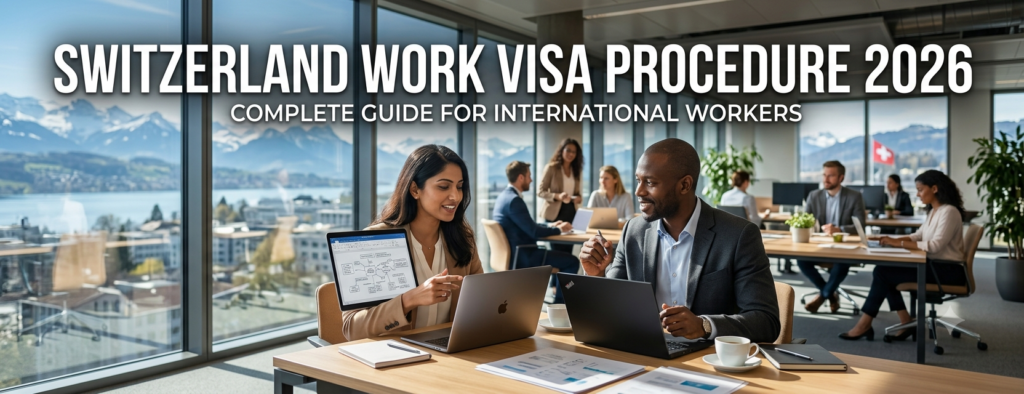
Switzerland remains one of the world’s most attractive destinations for skilled professionals, offering high salaries, excellent working conditions, and an exceptional quality of life. With a strong economy, low unemployment rate, and demand for qualified workers in sectors such as healthcare, IT, engineering, finance, pharmaceuticals, and hospitality, many professionals are interested in obtaining a Switzerland work visa.
If you are planning to work in Switzerland in 2026, understanding the latest visa requirements, work permit types, eligibility criteria, and application process is essential. This guide covers everything you need to know about the Switzerland Work Visa Procedure 2026.
Why Work in Switzerland?
Switzerland consistently ranks among the best countries for employment due to its:
- High average salaries
- Strong economy
- Excellent healthcare system
- Safe and clean cities
- Work-life balance
- International companies
- Career growth opportunities
Popular industries hiring foreign workers include:
- Information Technology (IT)
- Artificial Intelligence
- Banking and Finance
- Healthcare
- Pharmaceuticals
- Engineering
- Construction
- Hospitality
- Education
- Manufacturing
Switzerland Work Visa 2026 Overview
| Feature | Details |
|---|---|
| Country | Switzerland |
| Visa Type | Work Visa |
| Work Permit Required | Yes |
| Employer Sponsorship | Mandatory |
| Processing Time | 4–12 weeks (varies by canton and application) |
| Minimum Contract | Valid employment offer required |
| Family Sponsorship | Available for eligible permit holders |
Latest Switzerland Work Visa Updates for 2026
The Swiss Federal Council has maintained the annual work permit quotas for non-EU/EFTA nationals in 2026. The current allocation includes:
- 4,500 B residence permits
- 4,000 L short-term work permits
This means a total of 8,500 work permits are available for qualified third-country professionals in 2026. These quotas mainly apply to highly skilled workers recruited from outside the EU and EFTA.
Who Needs a Switzerland Work Visa?
You need a work visa if you are:
- A citizen of Pakistan
- India
- Bangladesh
- Nigeria
- Philippines
- Nepal
- Sri Lanka
- South Africa
- Most non-EU/EFTA countries
EU/EFTA citizens follow a simpler residence registration process and generally do not require the same work authorization procedure.
Types of Switzerland Work Permits
1. L Permit (Short-Term Residence)
Suitable for:
- Employment up to one year
- Temporary contracts
- Seasonal employment
Features:
- Usually valid for up to 12 months
- May be renewed in certain situations
2. B Permit (Residence Permit)
Best for:
- Long-term employment
- Permanent contracts
- Skilled professionals
Benefits include:
- Longer validity
- Family reunification eligibility
- Easier renewal
3. C Permit
Granted after several years of lawful residence and is generally not issued directly to first-time foreign workers.
Switzerland Work Visa Eligibility
To qualify in 2026, applicants generally must:
- Have a valid job offer from a Swiss employer.
- Possess relevant education or professional qualifications.
- Have several years of work experience for skilled positions.
- Meet Swiss salary and employment standards.
- Be employed in a position where the employer demonstrates that no suitable Swiss or EU/EFTA candidate was available.
Who Has the Best Chances?
Professionals in the following fields are in high demand:
- Software Engineers
- AI Specialists
- Data Scientists
- Doctors
- Nurses
- Pharmacists
- Civil Engineers
- Mechanical Engineers
- Electrical Engineers
- Financial Analysts
- Cybersecurity Experts
Required Documents
Applicants usually need:
- Valid passport
- Passport-size photographs
- Employment contract
- Job offer letter
- Educational certificates
- Professional qualifications
- Updated CV
- Experience certificates
- Police clearance certificate (if requested)
- Visa application form
- Proof of accommodation (where applicable)
Additional documents may be requested by the cantonal immigration authority.
Switzerland Work Visa Application Procedure 2026
Step 1: Secure a Job Offer
You cannot normally apply for a Swiss work visa without first obtaining employment.
Step 2: Employer Applies for Work Authorization
Your Swiss employer submits the application to the relevant cantonal authorities and provides evidence that hiring you complies with Swiss labor market rules.
Step 3: Cantonal Review
The canton reviews:
- Employer justification
- Salary
- Employment conditions
- Qualifications
- Quota availability
Step 4: Federal Approval
The State Secretariat for Migration (SEM) reviews eligible applications before final approval.
Step 5: Apply for Entry Visa
Once the work authorization is approved, applicants who require an entry visa submit their application to the Swiss embassy or consulate in their country.
Step 6: Travel to Switzerland
After receiving the visa, you may enter Switzerland.
Step 7: Register After Arrival
Within the required timeframe after arrival, register with your local municipality and obtain your residence permit.
Processing Time
Average processing times are:
- Employer approval: 2–8 weeks
- Visa processing: 2–6 weeks
Overall processing typically ranges from 4 to 12 weeks, depending on the canton, workload, and completeness of the application.
Switzerland Work Visa Fees
Fees vary depending on:
- Nationality
- Embassy
- Visa category
Applicants should also budget for:
- Residence permit fees
- Document translations
- Medical insurance (if applicable)
Can You Bring Your Family?
Yes.
Many B Permit holders may apply for family reunification, allowing eligible spouses and dependent children to join them, subject to Swiss immigration rules.
Can You Change Employers?
Usually yes, but changes often require approval from the relevant cantonal authorities, particularly for non-EU/EFTA nationals.
Can You Apply Without a Job Offer?
Generally, no.
For most non-EU/EFTA nationals, Switzerland requires a confirmed job offer before a work permit application can be submitted.
Highest Paying Jobs in Switzerland
Some of the highest-paying professions include:
- Doctors
- Dentists
- Surgeons
- IT Managers
- Software Engineers
- Investment Bankers
- Data Scientists
- Pharmacists
- AI Engineers
- Finance Directors
Best Job Websites
Useful websites include:
- LinkedIn Jobs
- Indeed Switzerland
- JobUp
- Jobs.ch
- EURES
- Company career portals
Tips to Increase Your Chances
- Gain relevant professional experience.
- Build skills in high-demand sectors.
- Prepare a European-style CV.
- Obtain recognized professional certifications.
- Learn basic German, French, or Italian depending on the canton.
- Apply to multinational companies with international recruitment programs.
Advantages of Working in Switzerland
Working in Switzerland offers numerous benefits:
- Competitive salaries
- Excellent work-life balance
- Strong employee protections
- World-class healthcare
- Modern infrastructure
- Stable economy
- Career advancement opportunities
- Access to international companies
- Safe and clean environment
Frequently Asked Questions (FAQs)
Is Switzerland accepting foreign workers in 2026?
Yes. Switzerland continues to recruit highly qualified foreign professionals under its annual work permit quota system.
Do I need a job offer before applying?
Yes. Most non-EU/EFTA applicants must first secure a job offer from a Swiss employer.
Can Pakistanis apply for a Switzerland work visa?
Yes. Pakistani citizens can apply if they receive a qualifying job offer and meet the eligibility requirements.
What is the processing time?
Most applications are processed within approximately 4 to 12 weeks, although timelines vary.
Is IELTS required?
No. Switzerland does not generally require IELTS for a work visa unless the employer specifically requests proof of language proficiency.
What is the minimum salary requirement?
There is no single nationwide minimum salary for work visas. Salaries must meet the customary wage standards for the occupation, region, and experience level.
Can I bring my family?
Yes, eligible residence permit holders may apply for family reunification.
Which work permit is best?
The B Permit is generally preferred for long-term employment and offers broader benefits than the L Permit.
Can I get permanent residency?
After meeting the required years of lawful residence and integration requirements, eligible residents may apply for a C Permit (permanent residence), subject to Swiss law.
Is Switzerland easy to immigrate to?
Switzerland has one of Europe’s most selective immigration systems for non-EU/EFTA nationals. Success typically depends on having in-demand skills, a qualifying job offer, and employer sponsorship.


Top Universities
 Daad
Daad  University of Oxford
  ANU University
  Monash University
  University of Warwick
  Yale University
  UCLouvain
  University of British Columbia (UBC)
  Istituto Marangoni London
  Bond University
 Recent Post

Common Scholarship Rejection Reasons
Read More 

How to Check If a Scholarship Is Fake...
Read More

How to Find Professor Email for MS/PhD Admissions...
Read More

Universities That Accept Students Without IELTS in 2026
Read More

Duke-NUS AI Medical Education Faculty Position 2026
Read More
Frontier AI Security Residency 2026 in UK (Fully...
Read More
SarkariNetwork – Government Jobs, Exam Alerts & Scholarship...
Read More

Is Arizona State University (ASU) Accredited?
Read More
Is Full Sail University Legit?
Read More
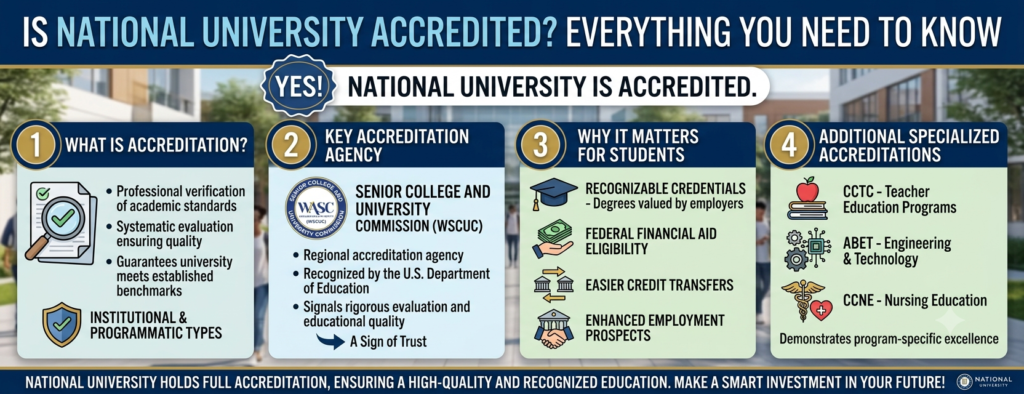
Is National University Accredited?
Read More

Work and Travel in Canada with the IEC...
Read More

The Practical Guide to GD&T Training: What It...
Read More



















0 Comments
No comments yet.